

If you are filing an H-4 EAD renewal for your spouse, you have probably assumed one thing: if the principal's H-1B gets premium processing, the whole family's paperwork will speed up along with it.
It doesn't work that way. The applications are usually filed together and share one receipt date, then go their separate ways inside USCIS. The H-1B is approved in two weeks, the H-4 status follows it, and the work permit goes on its own, often taking three or four months.
That didn't used to be a big deal. When the EAD expired, the automatic extension had you covered for up to 540 days, and you just waited. But renewals filed on or after October 30, 2025 no longer get an automatic extension. The day after the card expires, work authorization stops, and it stays stopped until the new card is approved. In other words, the question "how long will the EAD take?" now directly determines whether you can keep working. (How the rule itself draws the line, and whether you fall into an affected category, is covered here: Can You Still Work the Day Your EAD Expires? The Answer Now Is No.)
01 Three complete timelines
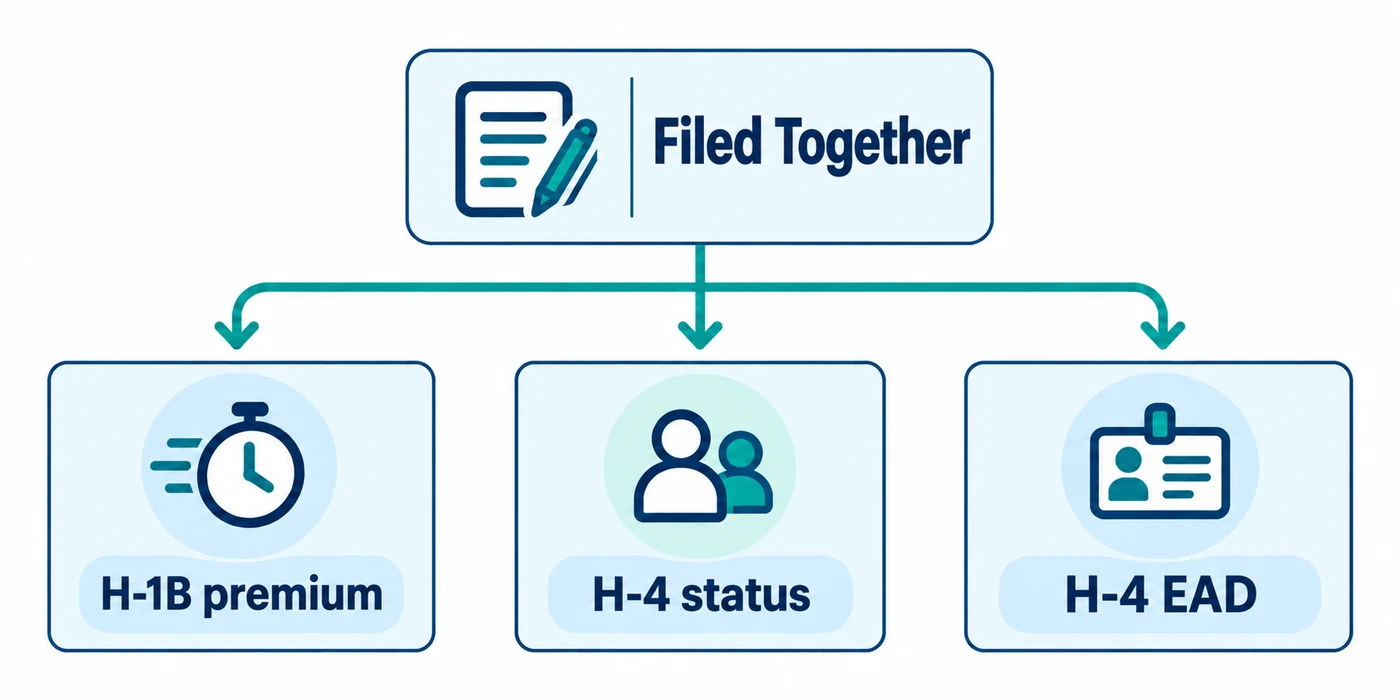
All three timelines below were posted by the applicants themselves in a public discussion forum. They are personal accounts, not verified decision records. All come from r/H4_Visa, clustered at the end of August 2026.
Timeline 1 (original post: H-1B, H-4 and EAD filed together, H-1B with premium processing)
April 20      Received
1st week May  H-1B and H-4 approved
April 24      EAD transferred to another office
May 29        Biometrics
              No status updates for the next four months
August 26     Service center reply: assigned to an officer
August 31     Approved, card being produced
The EAD took about four and a half months. The poster said the official processing time at filing showed 4.5 to 5 months, and the spouse's EAD was valid until October 8, "so at first we thought there was enough time and didn't worry much."
Timeline 2 (original post: paper filing, H-4 plus EAD)
May 13        Received
June 5        Biometrics
              H-4 approved one to two weeks after spouse's premium H-1B approval
              EAD split off from the H-4 and adjudicated separately
June 30       Expedite request submitted
August 28     EAD approved
About three and a half months. This one explains the mechanism most clearly: the H-4 status and the H-4 EAD get separated. The first follows the H-1B; the second doesn't.
Timeline 3 (original post: also filed together, H-1B with premium processing)
June 2        All three filed together at the Texas Service Center
June 15       H-1B approved under premium processing
July 22       Biometrics
August 13     Emailed the service center's expedite unit to follow up
August 15     H-4 approved
August 17     EAD approved
August 19     Card mailed
About two and a half months, the fastest of the three. The poster also shared the template for the follow-up email.
One email each month when the bulletin lands. Unsubscribe anytime.
02 What these three timelines show
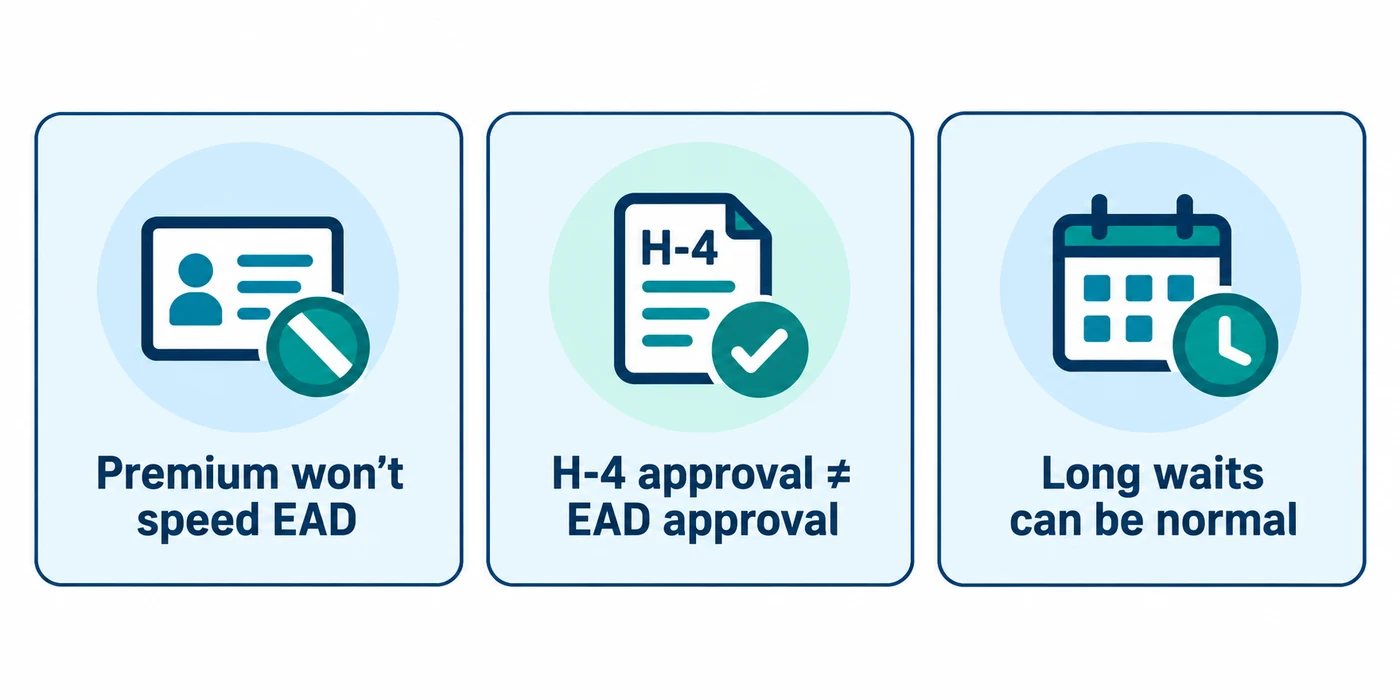
The premium processing fee does not buy EAD speed. In all three cases the H-1B was approved within two weeks, while the EADs took 2.5, 3.5 and 4.5 months. Premium processing is purchased per form, and Form I-765 (Application for Employment Authorization), which the EAD uses, is not on the list of forms eligible for premium processing.
H-4 approval does not mean EAD approval. In Timeline 2 the two were explicitly separated, and in Timelines 1 and 3 the H-4 was also approved one to two weeks before the EAD. Seeing the H-4 approval and assuming you can go back to work is a misunderstanding that can get you into trouble.
Long stretches with no updates are normal. In Timeline 1, after the transfer to another office on April 24, the status showed nothing at all for four months.
All three did the same thing toward the end: they contacted the service center themselves. In Timeline 1, approval came within eight days after an exchange of emails; in Timeline 3, the H-4 was approved two days after the email and the EAD four days after. But this doesn't prove cause and effect. We can't know what would have happened without the emails; we can only say that all three independently did this, and all three got a result afterward.
03 So how early should you file?
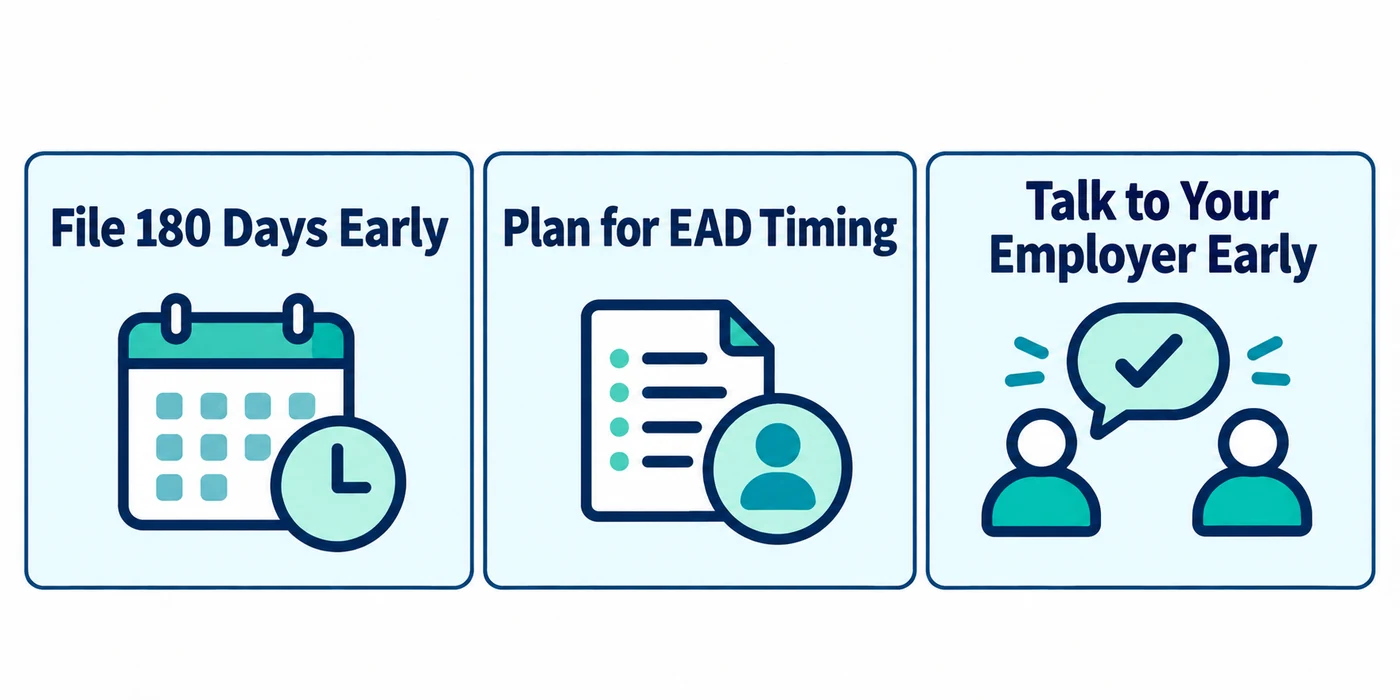
USCIS allows you to file a renewal up to 180 days before your EAD expires, and that is the earliest you can file. Going by the three timelines above, if you wait until only three months are left, there is a real chance of a gap.
File as early as you can, as soon as you hit 180 days. This is the one variable entirely up to you.
The rest, in order of importance:
- Don't treat your spouse's premium H-1B as insurance for the EAD. Plan your budget and expectations around the EAD's own pace
- It is normal to see nothing at all for a month or two after biometrics. It doesn't mean something is wrong with your case
- When expiration is approaching and there's still no news, many people contact the service center. All three cases did, and all three got results afterward, but three people's experiences don't amount to a reliable fast track
- Get on the same page with your employer early. If your work authorization lapses, whether you can take unpaid leave or work remotely depends on company policy
04 What we couldn't find out
There's no public data on how often gaps happen. USCIS publishes median processing times, not how many people lost work authorization while waiting.
Also, all three timelines above are from people whose cases were eventually approved. The people who post are usually the ones who got a result; those still waiting, or who have already left their jobs, don't show up in threads like these. So the real picture is probably worse than these three suggest.
If your plans depend on a specific date, have a qualified immigration lawyer check them, and don't treat forum timelines as a reliable guide.
Sources
- Basis for ending the automatic extension: USCIS interim final rule "Removal of the Automatic Extension of Employment Authorization Documents," published and effective immediately on October 30, 2025, Federal Register document number 2025-19702
- Filing within 180 days before expiration is USCIS's official recommendation
- The three timelines are taken from public discussions on r/H4_Visa, labeled as the applicants' own accounts, with links back to the original posts
This article is not legal advice. For your individual case, consult a qualified immigration lawyer.
Email alerts when your case status changes (in development)
We're building receipt-number tracking with automatic alerts and typical processing times. Join the waitlist to be first. This also subscribes you to the monthly bulletin email; unsubscribe anytime.