

Short answer: the official documents only ask that you keep working in the field named in your I-140. They do not say how wide "field" is. Whether a move from ML research to product management or consulting counts is not answered by any rule we found. It depends on your actual work and your evidence. This is general information and not legal advice.
Where this comes up. The I-485 instructions say: "If you filed or are concurrently filing Form I-140 as a self-petitioner, you must intend to work in the occupational field specified in the Form I-140. You must provide a signed statement confirming this intent, unless you are filing Form I-485 at the same time as your Form I-140 or while your Form I-140 is still pending." (Form I-485 Instructions, edition 09/18/26, item 8.) NIW and EB-1A are both self-petitioned.
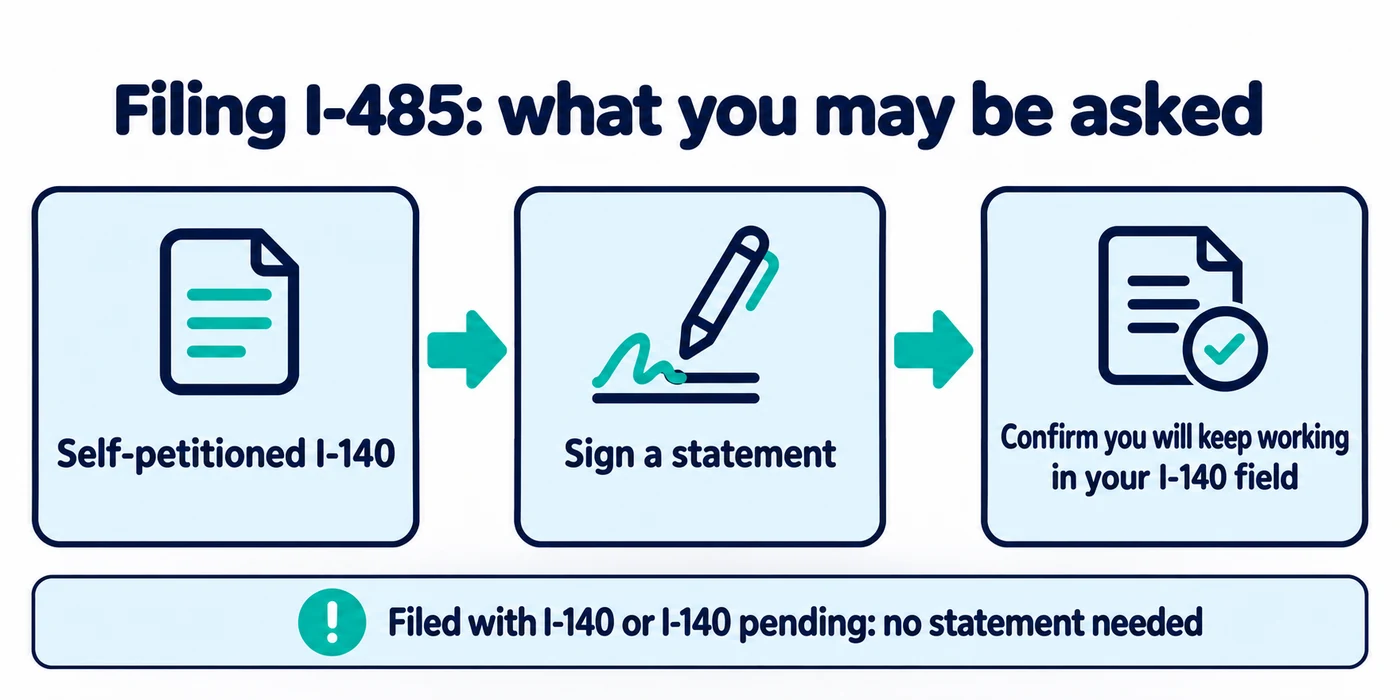
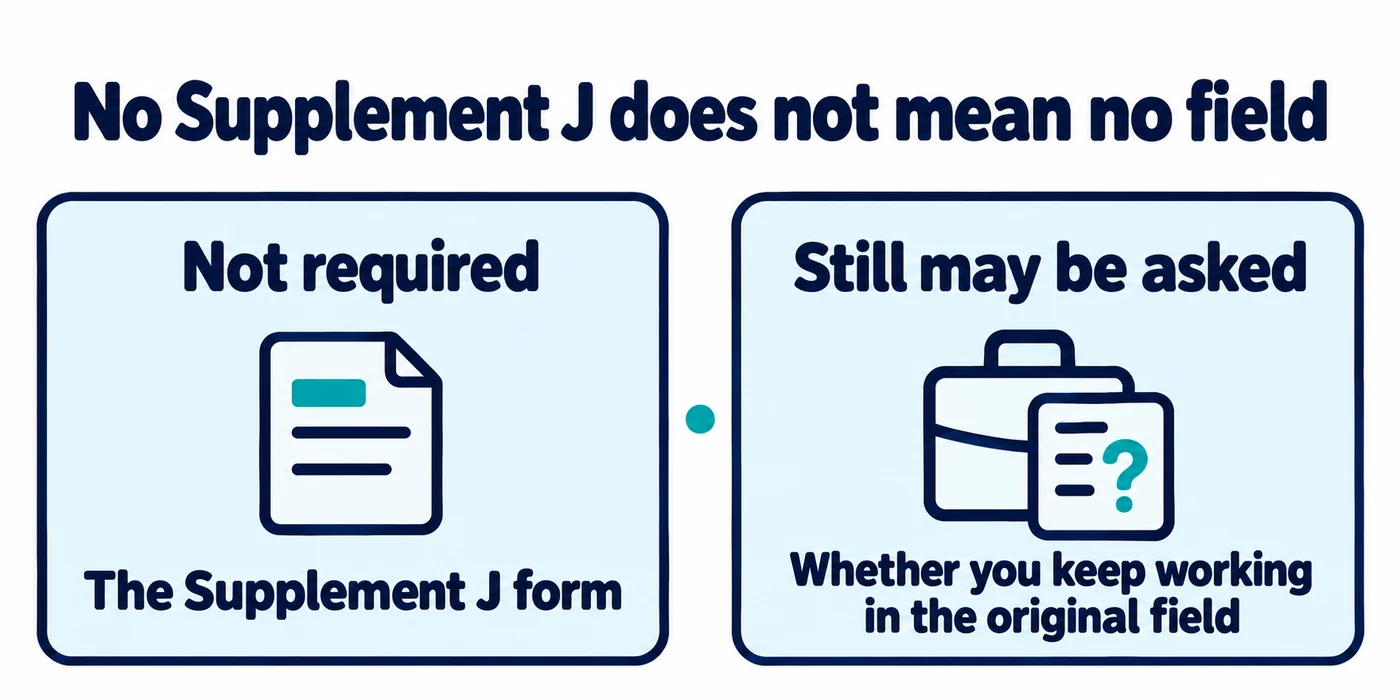
No Supplement J does not mean no field. The Policy Manual says NIW and EB-1A applicants "do not need to file Supplement J or request job portability under INA 204(j) because these employment-based immigrant visa categories are not tied to a specific job offer." That only removes a form.
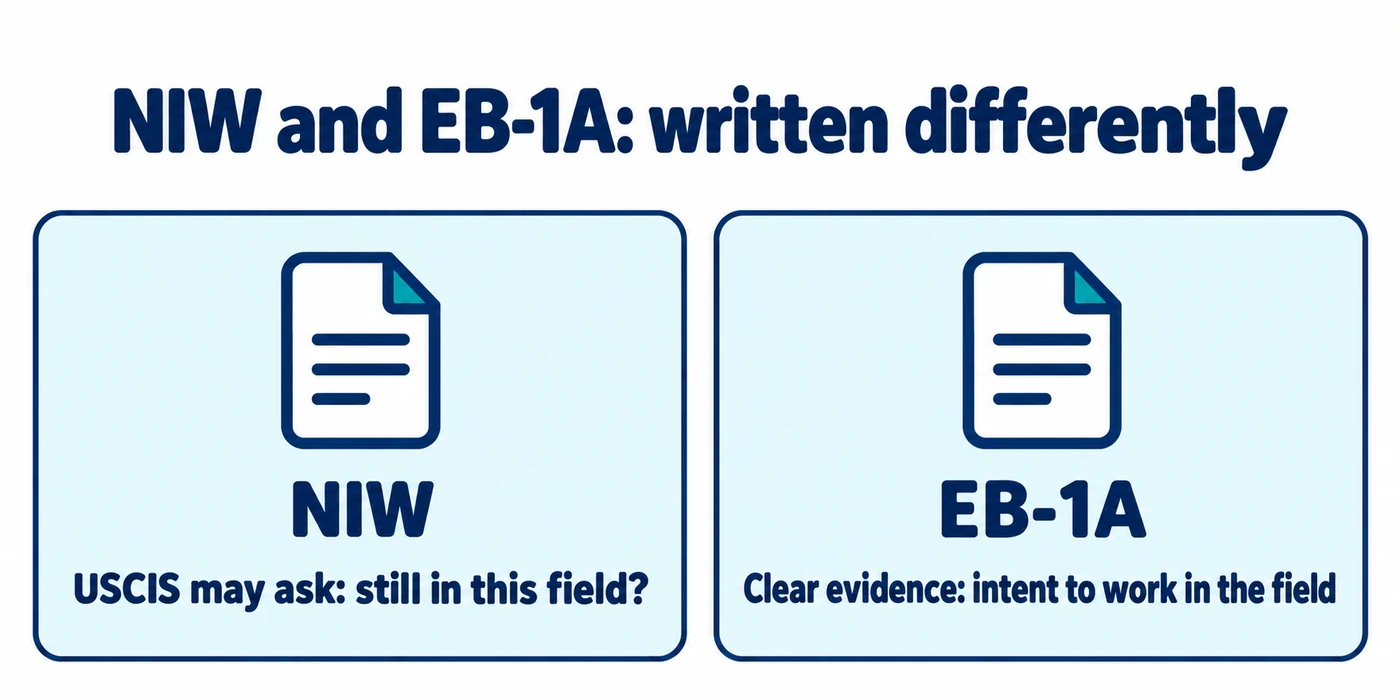
NIW and EB-1A are written differently. For EB-1A, the Policy Manual says people of extraordinary ability "do not require a job offer but must show clear evidence that they intend to work in the area of their expertise" (see 8 CFR 204.5(h)(5), which at the I-140 stage requires "clear evidence that the alien is coming to the United States to continue work in the area of expertise"). For a general NIW, it says USCIS "may inquire whether such applicants are continuing to work in the area or field that forms the basis of their immigrant visa eligibility." Since January 10, 2025 the Policy Manual also says NIW applicants are eligible for INA 204(j) portability. 204(j) itself keeps the petition valid for a new job after 180 days if the new job is "in the same or a similar occupational classification." How that applies to someone with no specific job offer is not spelled out.
One email each month when the bulletin lands, with what changed for EB-1. Unsubscribe anytime.
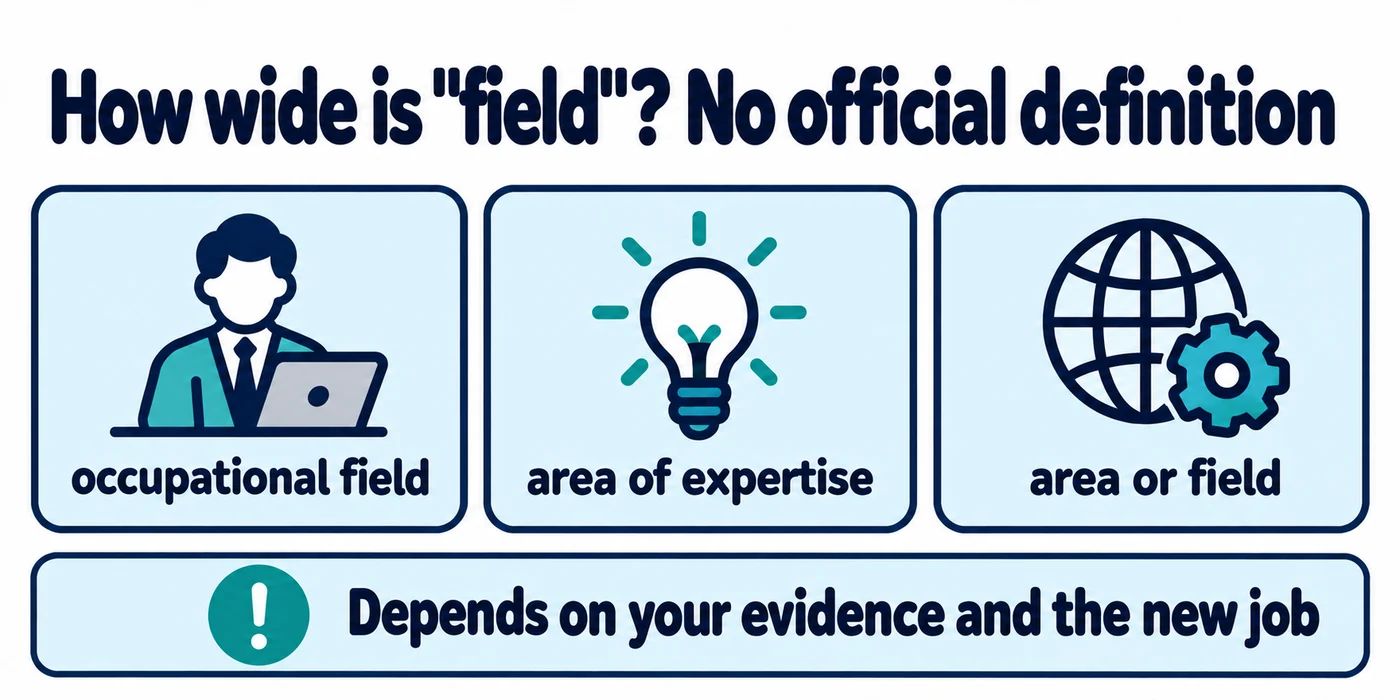
How wide is "field"? The documents use three phrases (occupational field, area of expertise, area or field) and we found no definition and no official example comparing research to product management. Look at what your I-140 said, what the new job actually involves day to day, and what documents tie them together.
What is documented and what is just repeated online. Documented: NIW and EB-1A can change employers or be self-employed (NIW physicians must file a new I-140). Not documented: that "anything goes", or that you can simply answer "no" or sign without meaning it.
Bad advice to ignore. A signed statement is a statement you make under your own name. If you have already decided to leave the field, signing that you intend to stay is false. A false statement is a separate and serious problem that can follow you into later entries and naturalization. This article does not cover that route.
Real cases. We have not found a public first-person account with an outcome. Two forum threads asked this question in October 2026. One has 2 replies and the other 4 (one of them the asker's own follow-up). Nobody describes their own case or an outcome, and a few replies are opinions without a source. One person's story, either way, would not be a pattern, so we do not offer one.
This does not replace a lawyer. See one before filing if: the new job is clearly different from your I-140 field; you already filed a statement and plan to change direction; you hold an NIW as a physician; you got an RFE or an interview notice asking about your work; you need to write an explanation letter; or you are unsure about the 180 days under 204(j).
Sources: [1] Form I-485 Instructions (09/18/26), item 8, https://www.uscis.gov/sites/default/files/document/forms/i-485instr.pdf. [2] USCIS Policy Manual, Vol. 7, Part E, Ch. 5, C.1 and footnote 4, https://www.uscis.gov/policy-manual/volume-7-part-e-chapter-5. [3] 8 U.S.C. §1154(j), https://www.law.cornell.edu/uscode/text/8/1154. [4] 8 CFR 204.5(h)(5), eCFR (2026-10-01 version), https://www.ecfr.gov/current/title-8/section-204.5.
Email alerts when your case status changes (in development)
We're building receipt-number tracking with automatic alerts and typical processing times. Join the waitlist to be first. This also subscribes you to the monthly bulletin email; unsubscribe anytime.