

From March through September of this year, 3,222 people made 4,762 predictions on our site about the visa bulletin for mainland China employment-based categories.
Seven months, three categories: EB-1 (first preference, extraordinary ability and multinational executives), EB-2 (second preference, advanced-degree professionals) and EB-3 (third preference, skilled workers and professionals). That's 21 rounds in all.
In every one of those 21 rounds, the correct answer was "no movement."
Yet six in ten of the predictions bet on "moves forward."
The numbers first
Here's how the 4,622 settled predictions broke down:
| Bet | Share | Result over 21 rounds |
|---|---|---|
| No movement | 30.8% | All correct |
| Forward 3+ months | 25.6% | All wrong |
| Forward 1 month | 24.4% | All wrong |
| Forward 2 months | 10.4% | All wrong |
| Retrogression | 2.6% | All wrong |
| Not sure | 6.1% | — |
Add up the three "forward" options and you get 60.4%. That 60% didn't get it right once in seven months.
So the overall hit rate works out to exactly the share who bet on "no movement": 30.8%.
We're not making fun of anyone
Betting on movement is a natural call, and the reasons aren't hard to understand:
You're waiting. The longer you wait, the more you need to believe next month will be different. And every month there really is a new bulletin, and there really are people in the news talking about visa numbers and doing quota math. There seem to be reasons for "it'll move" everywhere.
On top of that, during these seven months family-based categories really were moving a lot. In the September bulletin, F4 (fourth preference, siblings of US citizens) jumped 781 days at once, the biggest single-month move in eleven years. Seeing a number like that, it's hard not to feel the employment-based categories are about to speed up too.
The problem: family-based and employment-based categories run on different books.
Why "no movement" is the default answer
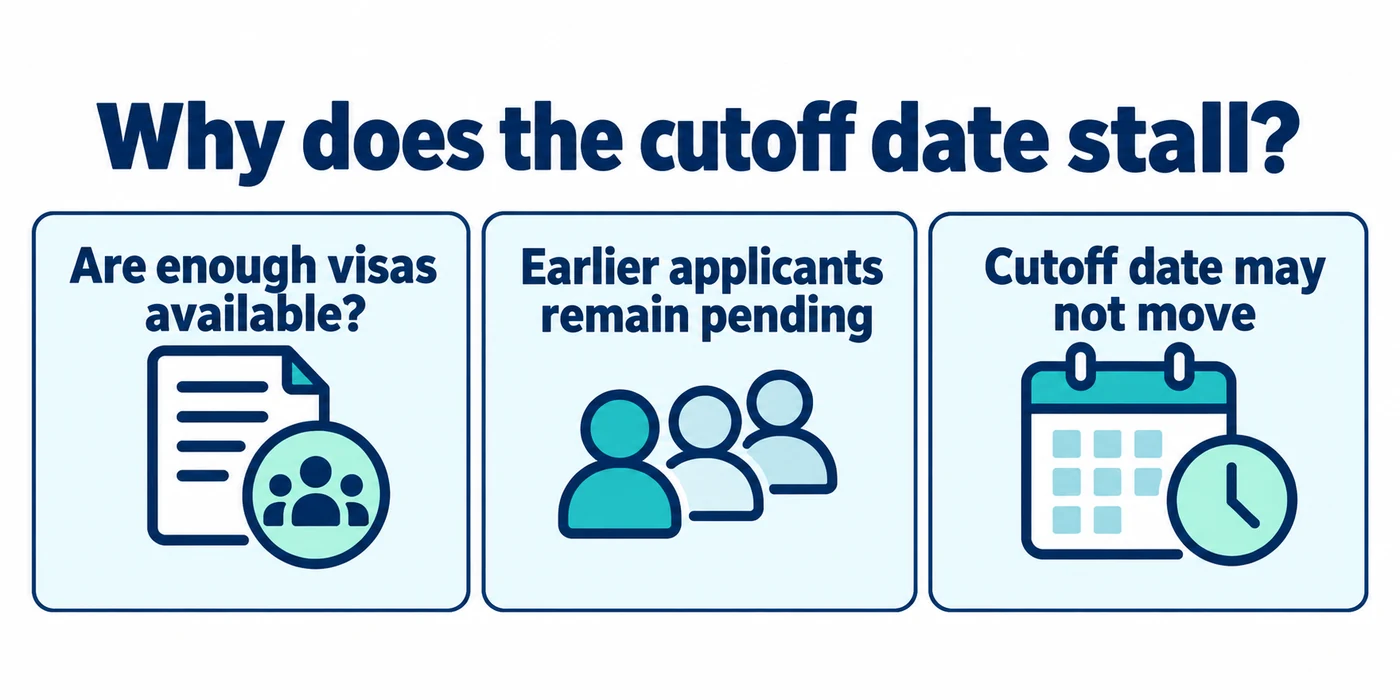
Whether the visa bulletin moves doesn't depend on how much time has passed. It depends on an accounting question: does this category have enough numbers this year to reach the next date?
- The number of visas is fixed each fiscal year, with a 7% per-country cap
- Mainland China's employment-based categories have been oversubscribed for a long time
- As long as the people ahead of you haven't been worked through, the cutoff date stays put
So "no movement" is neither bad news nor good news. It's the normal state of this system when a category is oversubscribed.
We've looked at a longer stretch before: in 57% of months, the bulletin didn't move at all (Why hasn't my green card priority date moved again?). EB-2 mainland China moved in only 4 of the past 12 months, and EB-3's Chart B moved just once all year. In any given month, the most likely thing to happen is nothing.
Some people beat the crowd
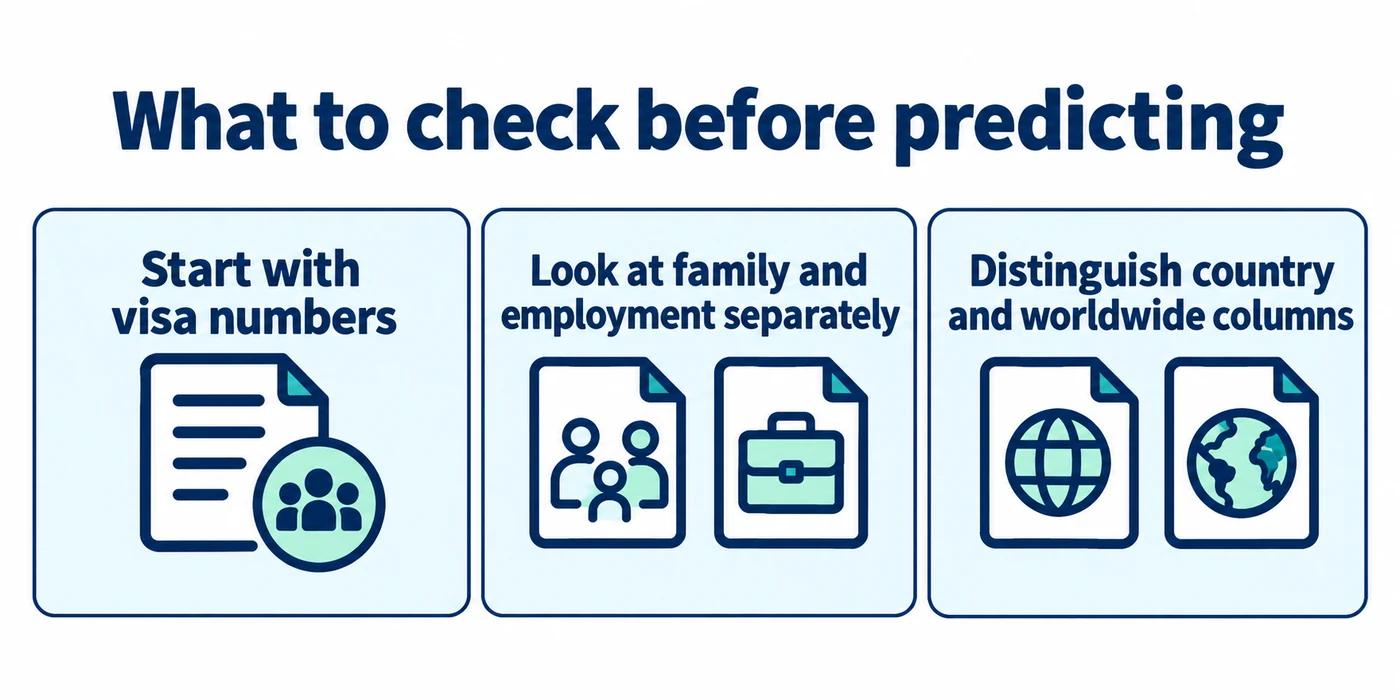
Not everyone is guessing blindly.
The user who made the most predictions on the site had 215 predictions with 89 correct, a hit rate of 41.4%, well above the overall 30.8%.
With a sample that large, it's unlikely to be luck. It shows that there is skill involved: knowing to look at visa numbers rather than how much the date moved last month, knowing to treat family-based and employment-based categories separately, and knowing the difference between oversubscribed countries and the worldwide column.
What these 21 rounds don't tell you
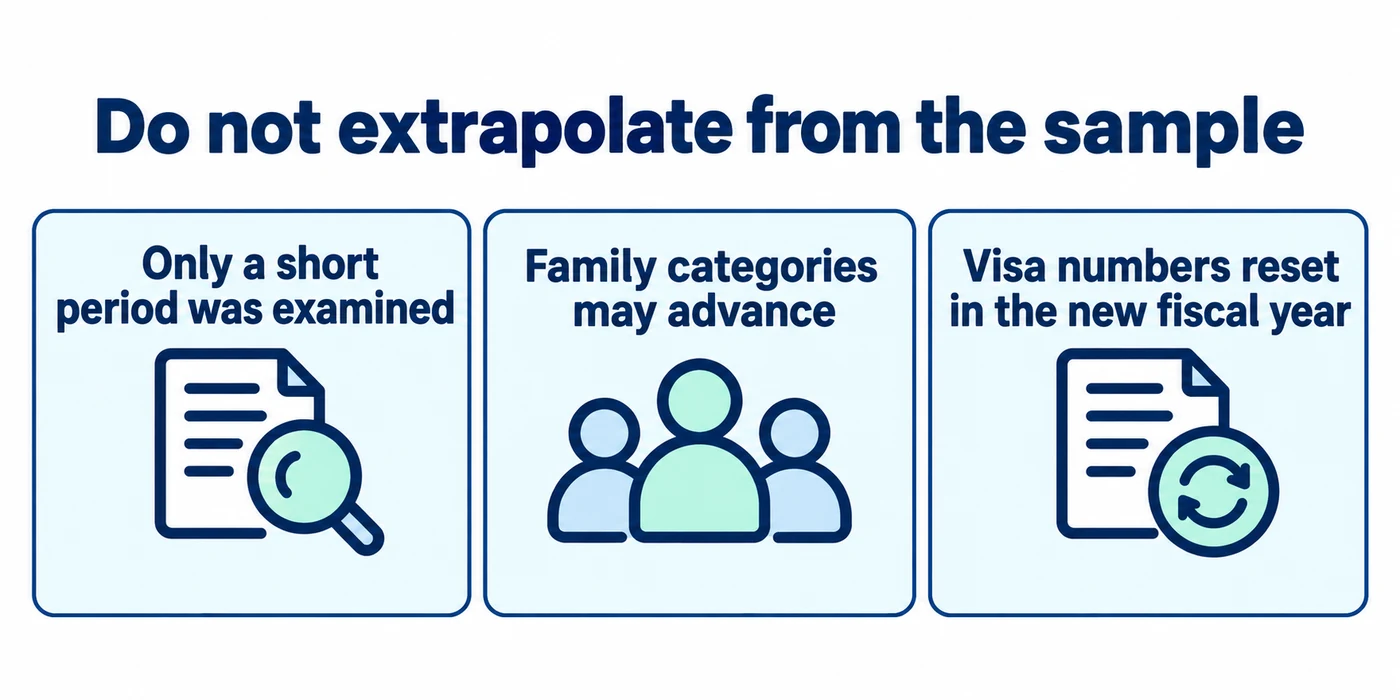
We have to draw the line clearly, or this article becomes just another kind of superstition:
- All 21 rounds are mainland China employment-based categories from March to September 2026, which happens to be a stretch when EB-2 didn't move for eight straight months
- The sample is both short and skewed. It can't be generalized into "the bulletin will never move again"
- Family-based categories advancing sharply over the same period is a counterexample
- The fiscal year resets on October 1 and visa numbers are recalculated. The first bulletin of a new fiscal year has historically been the one most likely to move
So the right conclusion isn't "always bet on no movement from now on." It's this: in oversubscribed categories, the prior probability of "no movement" is far higher than most people's intuition, and before placing a bet you should ask about visa numbers, not how much the date moved last month.
While we're at it, something we did badly
After these 21 rounds were settled, we never told a single participant whether they'd guessed right.
All 4,762 predictions were settled, and zero feedback went out. 83% of participants came for just one month and never returned. Looking back, that's no surprise.
We're fixing this. After the next bulletin is settled, you'll see your own result and your running record.
Next round
The October bulletin is the first of the new fiscal year. As explained above, it's the bulletin most worth betting on all year, and also the one least suited to reasoning from "it hasn't moved in the past seven months."
When it comes out, we'll publish the record of these 21 rounds alongside it for comparison.
One email each month when the bulletin lands. Unsubscribe anytime.