

Over the past few weeks, a lot of people have been hearing the same advice: while your I-485 (application to adjust status) is pending, don't travel abroad on advance parole (AP, the travel permit issued in advance that lets you return). Some people had already booked trips to Europe and called them off after a single sentence from their lawyer.
Plenty of people on forums are repeating this advice, but few can say what it's based on. There is a basis, and it's quite specific.
01 On August 13, the Board of Immigration Appeals overruled a 2012 precedent
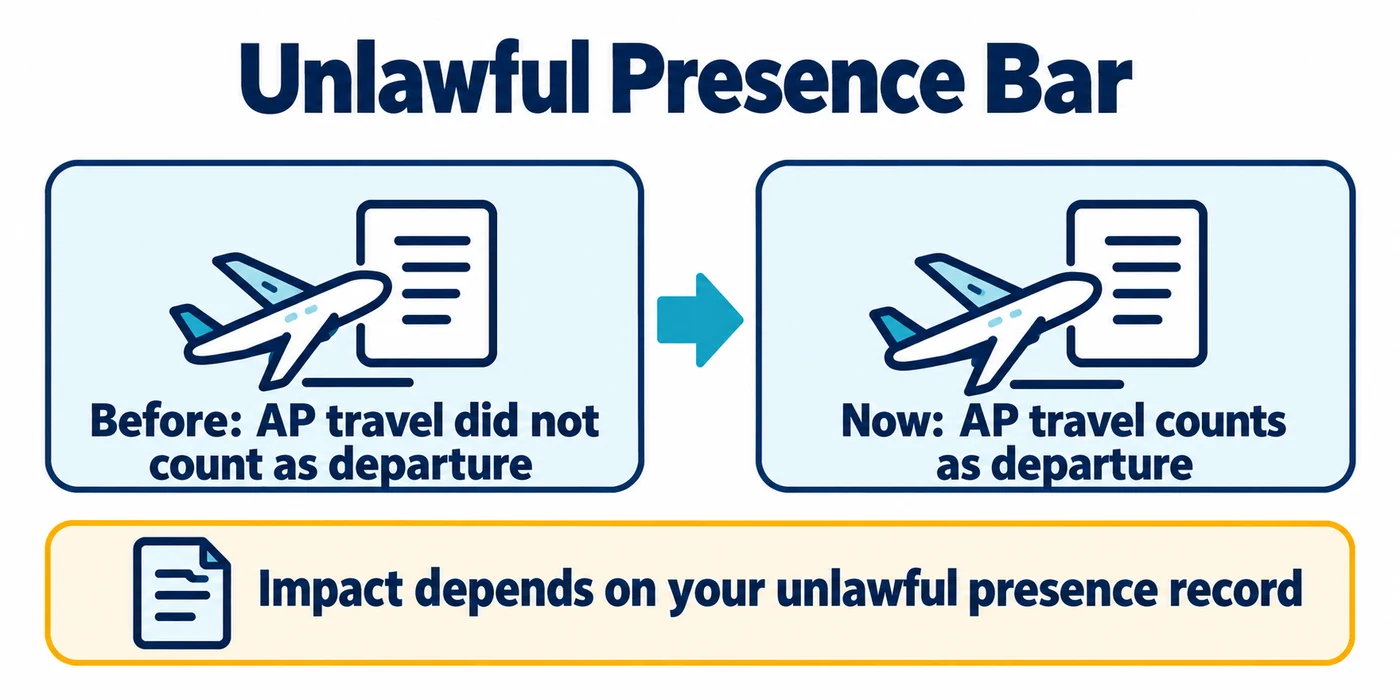
USCIS has posted an alert at the top of its "Travel Documents" page:
On Aug. 13, 2026, the Board of Immigration Appeals (BIA) issued a precedent decision, Matter of Delcarmen-Lara, 29 I&N Dec. 830 (BIA 2026), that overruled Matter of Arrabally and Yerrabelly, 25 I&N Dec. 771 (BIA 2012).
As of Aug. 13, 2026, departing the United States after obtaining an Advance Parole Document is a departure for purposes of inadmissibility under section 212(a)(9)(B)(i) of the Immigration and Nationality Act (INA).
In plain terms: starting August 13, 2026, leaving the country on advance parole counts as a "departure" for purposes of the unlawful presence bar to admission.
The 2012 Matter of Arrabally decision reached exactly the opposite conclusion: leaving on AP was not a departure, so it couldn't trigger the bar. That's what many people have relied on for years when they traveled on AP with peace of mind. It's now gone.
02 Why "does it count as a departure" matters so much
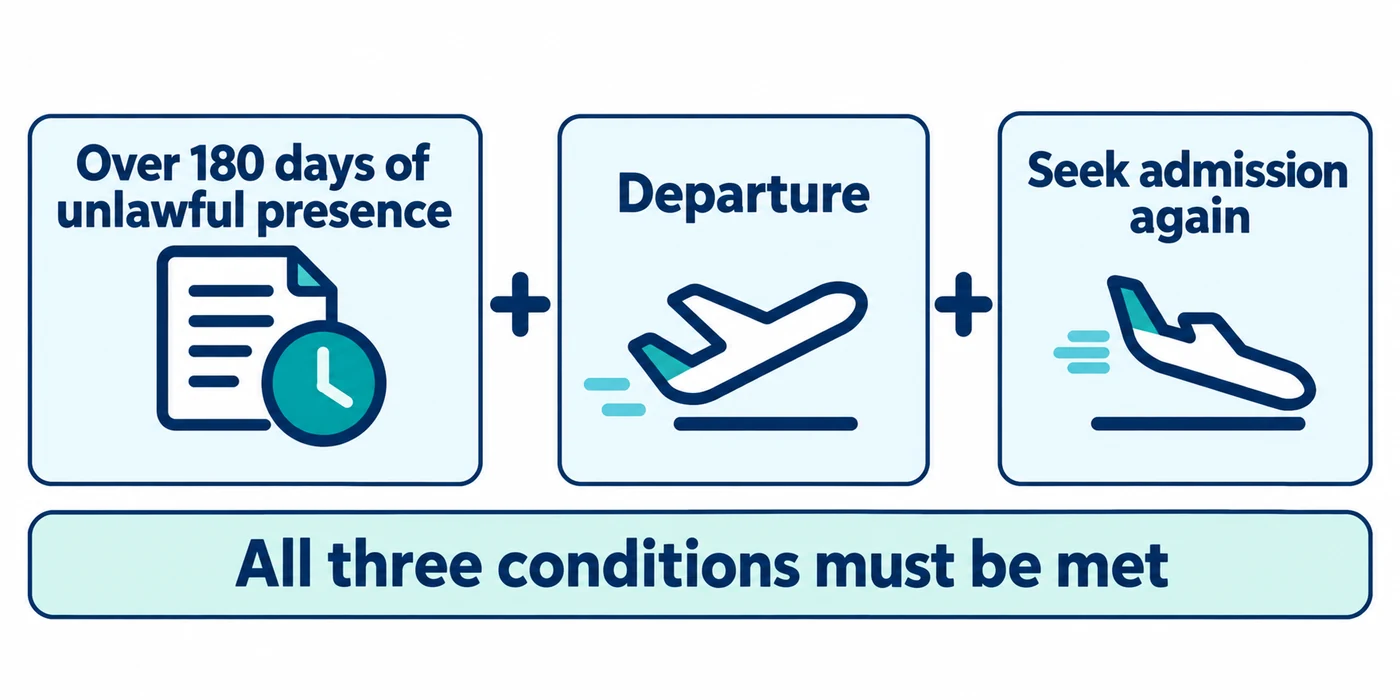
INA 212(a)(9)(B)(i) is what's commonly called the "three- and ten-year bars." In the same section, USCIS spells out what triggers them:
aliens who accrue more than 180 days of unlawful presence in the United States, depart the United States, and then again seek admission within the relevant 3- or 10-year statutory period, are inadmissible
All three conditions must be met: more than 180 days of accrued unlawful presence, a departure, and seeking admission again.
Before, leaving on AP wasn't a "departure," so the second condition was missing and the chain was broken. Now that link has been filled in. If you have never accrued unlawful presence, this bar still has nothing to do with you. What changed is the middle link of the chain.
The problem is that many people don't actually know whether they've ever accrued unlawful presence. A gap after your status expired, staying on after a visa denial, or a problem with your SEVIS record can all count without your knowing it.
One email each month when the bulletin lands. Unsubscribe anytime.
03 One more thing, unrelated to this but always true
Advance parole has never guaranteed you'll be let back in. In USCIS's words, AP holders still have to go through inspection at the port of entry, and the officer there decides on the spot whether to admit or parole you.
This isn't a new rule. It's just that for the past few years few people actually ran into it. This year, more people have.
04 So what are the real options now?
Forum members keep mentioning two alternatives, each with its own cost:
Get a new H-1B visa and enter on it. You don't depend on AP; you come back in H-1B status. The cost is that visa interview appointments in China are extremely hard to get right now: Beijing and Guangzhou are booked into next year, and the visa section at the Shanghai consulate is still under renovation.
Take a short trip to Canada or Mexico and reenter under automatic visa revalidation. It applies narrowly and comes with many conditions, and a lot of situations don't qualify.
Or don't leave at all. This is the advice lawyers give most often, and it's the only option with no extra unknowns.
05 Three things to confirm before you go
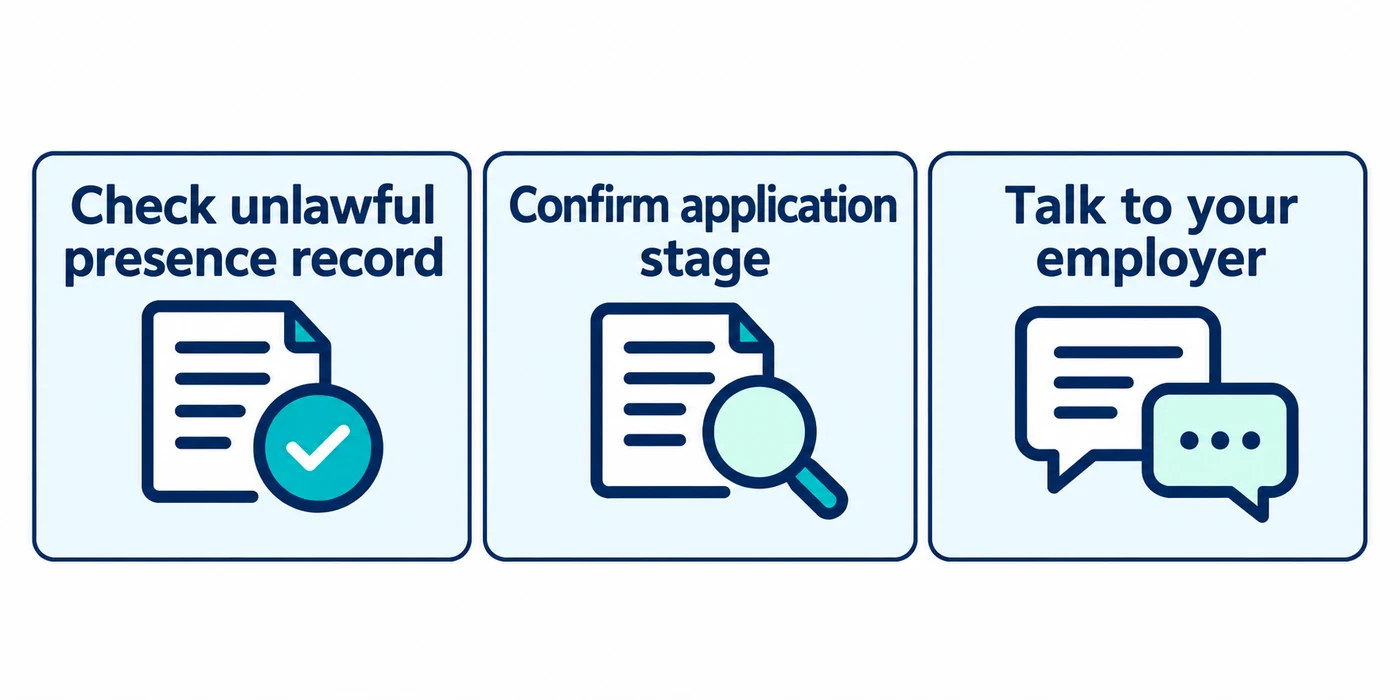
Whether you've ever accrued unlawful presence. This is the only variable that decides whether 212(a)(9)(B)(i) applies to you, and it's the thing you most need a lawyer to work out. It's easy to get wrong on your own.
What stage your I-485 is at. An interview notice, a request for evidence, or the validity of your medical exam could all run past a deadline because of one long trip.
Whether your employer can handle it if you can't get back. If you're pulled aside for further review at the port of entry, you need to know what your company's policy is. This is the one answer you can get clearly and with complete certainty right now.
06 Data we don't have
There are no public statistics on how often people entering on AP are turned away. USCIS publishes policy, not the outcomes of discretionary decisions at ports of entry. The individual stories circulating on forums have no denominator and can't be verified.
This article can say only one thing for certain: before and after August 13, the law gives a different answer to "does leaving on AP count as a departure?" Whether that change affects you depends on your own record of presence in the US, and that answer isn't online. It's with your lawyer.
Sources
- The alert at the top of the USCIS "Travel Documents" page; quotations are from the original text
- Precedent: Matter of Delcarmen-Lara, 29 I&N Dec. 830 (BIA 2026), overruling Matter of Arrabally and Yerrabelly, 25 I&N Dec. 771 (BIA 2012)
- Basis for the bar to admission: Immigration and Nationality Act section 212(a)(9)(B)(i)
This article is not legal advice. Calculating unlawful presence and whether a bar applies are case-by-case determinations; please consult a qualified immigration lawyer.